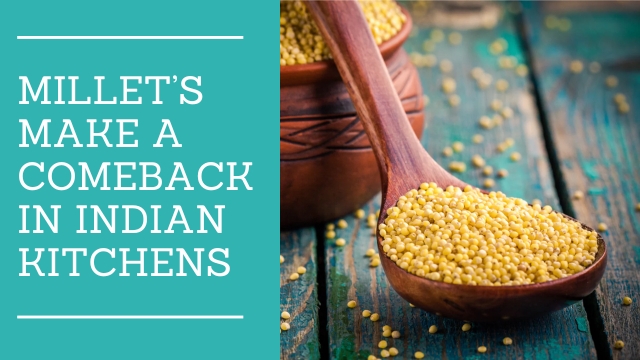
For decades, millets were seen as old-fashioned—relegated to rural kitchens, government rations, and the occasional fasting meal. But in 2025, they’re suddenly everywhere: on restaurant menus, in protein bars, and even in school lunch programs. From foxtail millet salads to ragi dosas, these tiny grains are being hailed as the future of sustainable eating.
This revival isn’t just a health trend—it’s a cultural reset. Millets are making their way back into urban diets for all the right reasons: they’re nutrient-dense, gluten-free, climate-resilient, and deeply Indian.
Rediscovering Our Roots
Long before rice and wheat became dominant staples, Indian communities across regions consumed various types of millets as part of their daily diet. Bajra (pearl millet), jowar (sorghum), ragi (finger millet), and kutki (little millet) have been grown and eaten for centuries—particularly in dryland farming communities where other grains struggled to survive.
Now, these ancient grains are seeing a second life. With increasing awareness around lifestyle diseases, processed food fatigue, and environmental sustainability, millets are being recognised not as “poor man’s food,” but as smart man’s food.
Nutrition Powerhouses in a Tiny Package
What makes millets so valuable isn’t just their heritage—it’s their nutritional profile. Rich in fibre, calcium, iron, and complex carbohydrates, millets provide long-lasting energy and support digestion, blood sugar regulation, and heart health. For people with gluten intolerance or diabetes, they’re a natural alternative to heavily refined cereals.
Nutritionists across India are now recommending millets as a regular part of the diet—not just as a swap, but as a superior grain. “A bowl of ragi porridge can give you as much calcium as a glass of milk,” says clinical nutritionist Neha Desai. “And jowar rotis keep you full longer than wheat.”
What’s more, millets are less processed, more local, and rarely stored for long periods—meaning fewer preservatives and fresher consumption cycles.
Climate Smart, Farmer Friendly
Millets don’t just benefit the consumer—they’re a gift to the planet and the farmer.
Unlike water-guzzling rice and wheat, millets grow easily in arid regions with minimal inputs. They are pest-resistant, drought-tolerant, and require far less fertilizer. This makes them a natural choice for climate-smart agriculture in a country facing extreme weather conditions and shrinking water tables.
For small and marginal farmers, millet cultivation offers economic stability and ecological sustainability. The renewed interest in these grains is creating new market linkages, encouraging agro-diversity, and supporting traditional farming systems.
On Plates and Menus Everywhere
What was once considered “village food” is now being reimagined by India’s top chefs. Restaurants in cities like Mumbai, Bengaluru, and Delhi are proudly showcasing millet-based dishes—from jowar risotto to barnyard millet pulao and ragi brownies.
Packaged food brands are also catching on. Millet-based snacks, energy bars, cereals, and ready-to-cook mixes are popping up on supermarket shelves and online platforms. Even home bakers are experimenting with millet flour as a base for cakes, cookies, and rotis.
Government support has added momentum to this shift. With 2023 declared the International Year of Millets by the UN (an initiative spearheaded by India), awareness campaigns, millet festivals, and inclusion in public distribution systems and midday meals have helped make these grains more mainstream.
A Trend That’s Here to Stay
While superfoods often come and go with hype cycles, millets are different. They’re not imported novelties. They’re hyperlocal, accessible, and deeply tied to India’s culinary roots.
Their comeback is part of a larger food movement—one that values sustainability, supports local agriculture, and reclaims the wisdom of traditional diets. Millets represent the kind of eating that’s better for the body, the soil, and the economy.
For home cooks, making the switch doesn’t have to be dramatic. Replacing one wheat-based meal a day with millets—or even mixing them into existing dishes—is a good start. As urban taste buds adjust, demand will only grow—pushing more farmers to grow, and more chefs to innovate.
Millets are no longer the underdogs of Indian agriculture. They’re fast becoming symbols of conscious eating—bringing together health, heritage, and hope for a more sustainable future.
So the next time you’re choosing between white rice and ragi, or maida and jowar, remember: you’re not just feeding yourself. You’re fueling a revolution—one grain at a time.